Intent vs Impact & Accountability
Welcome to the #culturedrop. Every Tuesday, Galen Emanuele emails tools to advance leadership skills, team culture, and personal growth. No spam, just great content. Sign up now to get it in your inbox.
Intent, impact, & accountability: humility & being coachable is clutch to your career.
In every stage of your career, a few traits consistently separate people who grow from people who stall. Two of the most important are humility and coachability. They shape how you build relationships, how effective you are as a leader, and how others experience working with you.
These aren’t abstract ideals, they are observable behaviors. And they show up most clearly in one very common situation: receiving feedback.
“What matters most in those situations is not perfection or the fact that you messed up, but receptiveness.”
Feedback is where these traits get revealed.
At some point we all ruffle someone else’s feathers, deliver something with a tone that isn’t productive, drop the ball, and/or do a myriad of things that don’t land well. And also at some point, we will all receive feedback in this regard.
Maybe a decision missed the mark, communication fell short, or behavior had an unintended impact. In your work career, it will inevitably happen. What matters most in those situations is not perfection or the fact that you messed up, but receptiveness.
There are two typical reactions:
One is defensiveness: shifting blame, explaining it away, justifying behavior based on good intentions, or dismissing the feedback.
The other is ownership: acknowledging the impact, taking responsibility, and being open to learning, even if the intent was positive.
The difference between those responses is significant, and a huge red or green flag. It’s also often what people remember most.
“Most people don’t set out to create negative outcomes. Intent is usually good. But in a professional environment, impact carries more weight than intent.”
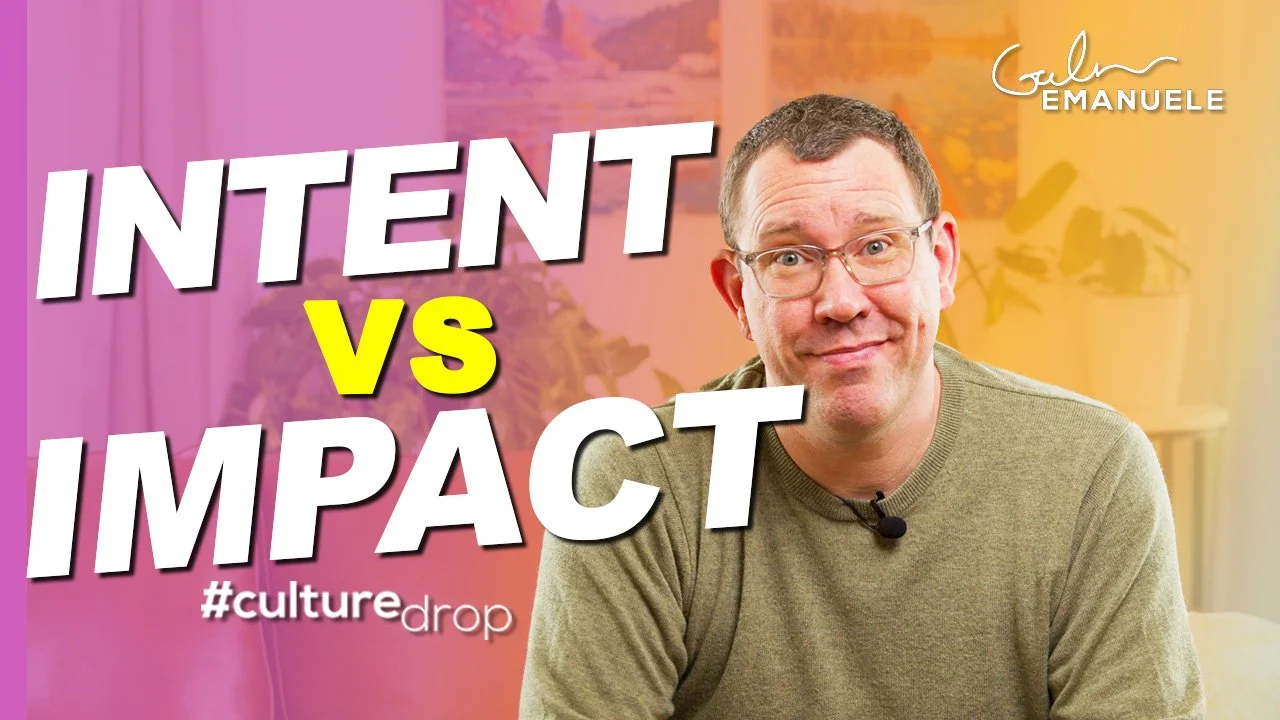
Intent vs impact.
Most people don’t set out to create negative outcomes. Intent is usually good. But in a professional environment, impact carries more weight than intent.
Being able to say, “I see how that landed, and I understand the impact,” demonstrates awareness and maturity.
It doesn’t mean that you have to fully agree with every piece of feedback. It means you recognize that other people’s experiences are real and worth considering, and that regardless of your intent, the way you impact people matters more.
That mindset builds credibility.
Receptiveness builds trust.
People notice how you handle feedback. It says a lot about who you are as a person and coworker.
“When someone consistently resists or deflects and takes no personal ownership, it creates distance and sends the message that protecting their own image is a higher priority than the relationship.”
When someone consistently resists or deflects and takes no personal ownership, it creates distance and sends the message that protecting their own image is a higher priority than the relationship. That makes it harder to trust them because of the feeling that they won’t engage honestly.
On the other hand, when someone listens, reflects, and takes ownership where appropriate, it creates the opposite effect. It shows confidence without ego. It proves to others they can be candid with you, that you have the ability to be real and vulnerable. Those are both solid foundations for strong, healthy working relationships.
Being coachable is a career booster.
Coachability is really about embodying one question: “What can I learn from this?”
Even when feedback is uncomfortable or delivered imperfectly, there’s usually something useful to gain from it. People who look for that insight and apply it tend to improve faster and adapt better.
They also signal to leaders that they’re accountable, adaptable, emotionally mature, and competent to take on more responsibility. Not because they never make mistakes, but because they learn from them.
“Skills and results matter, but humility and coachability are strong indicators of long-term potential and great leadership qualities.”
What this means for leaders.
If you’re evaluating talent or thinking about who to promote, pay attention to how people handle feedback.
Skills and results matter, but humility and coachability are strong indicators of long-term potential and great leadership qualities. Someone who can acknowledge missteps, learn quickly, and adjust will often outperform someone who needs to appear flawless.
They will also create more trust and cohesion as a leader and within their teams. Those are the kinds of people who can grow into bigger roles and lead more effectively.
Keep it simple.
You don’t have to agree with every piece of feedback you receive. But being open to it, considering the perspective, and looking for what you can take away goes a long way.
Humility and coachability are about staying adaptable, grounded, and focused on growth and fostering strong relationships.
That combination earns trust, accelerates improvement, and moves careers forward.
Related Blogs:
Don't Be an Asshole: Workplace Edition

Want more?
This article was created by Galen Emanuele for the #culturedrop. Free leadership and team culture content in less than 5 minutes a week. Check out the rest of this month's content and subscribe to the Culture Drop at https://bit.ly/culturedrop
MORE