How to Run Better Meetings
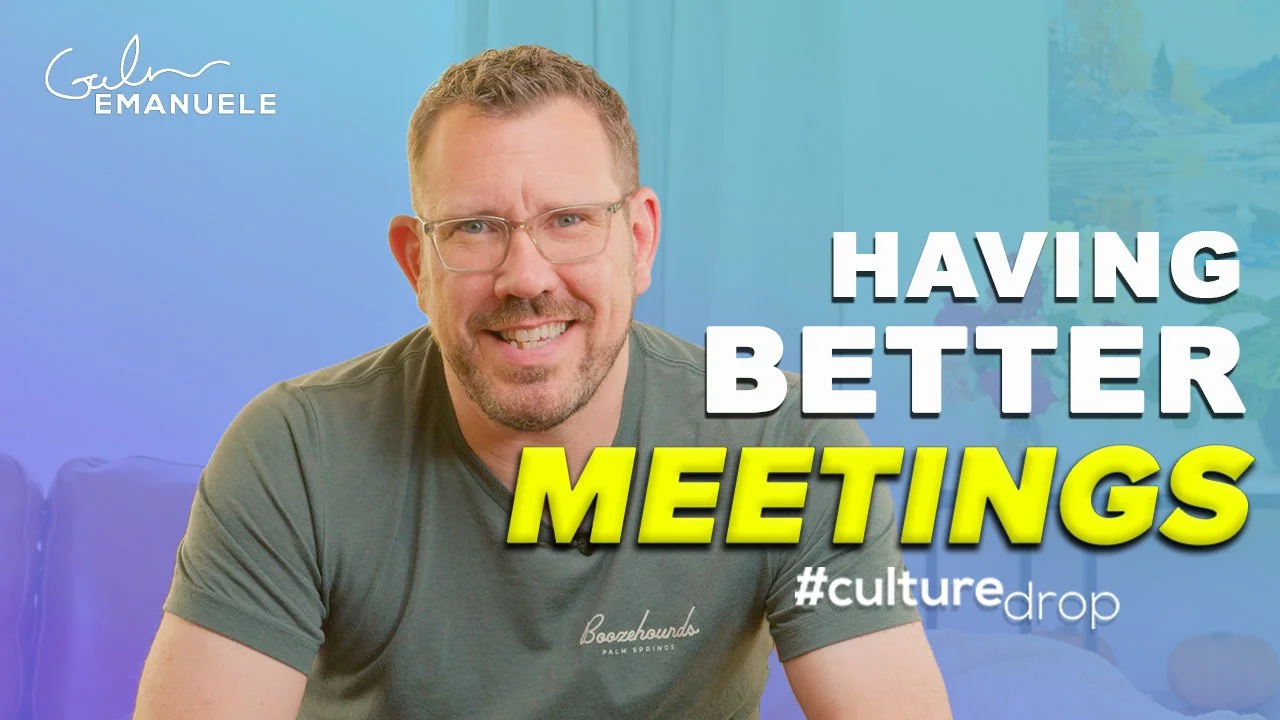
Welcome to the #culturedrop. Every Tuesday, Galen Emanuele emails tools to advance leadership skills, team culture, and personal growth. No spam, just great content. Sign up now to get it in your inbox.
Meetings don't have to be torturous, but bad facilitation makes them suck.
This week’s Culture Drop is about running and facilitating better meetings. If you lead a team or facilitate meetings then this is a skill worth sharpening. Bad meetings are brutal. Good ones are not. Here's a rapid-fire rundown of some things that really matter and impact how good or bad meetings are.
“Staying on time and on track keeps you from two bad outcomes: running way over, or cutting off everything important because the first half of the meeting ate all the time.”
Watch your time & pacing.
First things first: how long is the meeting supposed to be? Have an agenda, and then actually look at it and watch the clock to make sure the meeting doesn’t go way over or miss topics.
We've all been in a meeting where there's a full list of things to cover and suddenly there are 10 minutes left and you're only halfway through. That's a pacing problem. Are you staying on topic? Are people talking too long? Are you letting the conversation wander?
Staying on time and on track keeps you from two bad outcomes: running way over, or cutting off everything important because the first half of the meeting ate all the time.
Engage everyone, not just the extroverts.
Here's a common scenario: Someone shares a bunch of info, then asks for input and nobody says a word. It's awkward.
Remember that some people process out loud. They figure out how they feel about something by talking through it. But plenty of people need time to think before they can respond. They can't just blurt out an opinion the second information hits them.
“Plenty of people need time to think before they can respond. They can’t just blurt out an opinion the second information hits them.”
So try this instead. Share what you need to share, tell the team you want their input, and then give them space to think. Say something like, "Let's take a minute or two. Turn off your camera if you want, jot down a few thoughts, and then we'll come back together and I'd love to hear from each of you."
Let people sit in silence to reflect and actually process. Then ask for their feedback. It solves that awkward "does anyone have any questions/input?" moment where nobody says anything. Actually give people the time they need to have something to say.
And when you do go around for input, don't just rely on the couple people who love talking. Make sure they're not eating up all the airtime, and make a point of inviting others in directly. Something like, "Kari, I’d love to hear your thoughts" or "Jenny, do you want to share if you wrote anything down?"
You don't need to put everyone on the spot or make them uncomfortable. But know that some people will never share unless you invite them to. And give them some time to think.
Shorter meetings are often better meetings.
Shortening your meetings forces brevity. It makes people move faster and stay sharper. A lot of meetings scheduled for an hour could genuinely happen in 15 minutes if everyone stayed efficient.
Unless something genuinely needs discussion, keep moving. Share the update, get the input, keep it moving. Your team will thank you for it. Nobody's falling asleep in a meeting that respects their time.
Who actually needs to be there?
If someone doesn't need to be in a meeting, don't put them in the meeting. If something can be handled with an email or a quick message, do that instead. Be thoughtful about who actually needs to be in the room.
This matters even more with larger group meetings. Structure your agenda so the topics that apply to everyone come first. Save the items relevant to only a subset of people for the end. That way, once you hit the point where the group topics are done, you can say "everyone in this group, you're free to go" and let people get back to their day.
“So many people sit through a 30-minute meeting when the only part relevant to them happened in the first five minutes”
So many people sit through a 30-minute meeting when the only part relevant to them happened in the first five minutes. Then they're stuck sitting there hoping that the Wi-Fi goes down. Value people’s time.
Know (and share) what the meeting is for.
It also helps to be clear about the purpose going in. Is this meeting about sharing information so everyone's aligned? Gathering input? Making a decision as a team?
Naming the purpose up front helps people understand how to participate and what's expected of them.
Lastly, could this have been an email?
Last thing: if a meeting doesn't need to happen, don't have it. People spend an enormous amount of their working life in meetings, so when you do have one, make sure that it’s necessary, and efficient.
For more tips, go Google "facilitating better meetings" and find tons of articles with a million different tips. There’s a lot of great ideas out there. Be intentional about it, and beef up your skills. Whether you're on a leadership team or you facilitate meetings often, get better at this.
Go be awesome. And you're welcome to everyone out there who hates meetings:)
Related Blogs:
5 Tips for Better Brainstorming Meetings

Want more?
This article was created by Galen Emanuele for the #culturedrop. Free leadership and team culture content in less than 5 minutes a week. Check out the rest of this month's content and subscribe to the Culture Drop at https://bit.ly/culturedrop
MORE